

What is an Abrasion?
An abrasion is a type of superficial wound that happens when the top layer of the skin is scraped or rubbed off, usually by contact with a rough surface. It is common in falls, sports injuries, or accidents where the skin slides across pavement or other hard surfaces. Although abrasions are usually not deep, they can be painful and may bleed slightly. In wound care, medical dressings are used to protect the area, keep it clean, and help the skin heal properly while preventing infection.
Appearance
Abrasion usually appears red and raw because the top layer of skin has been rubbed off. There may be a small amount of bleeding, often seen as oozing rather than flowing blood. The area can also feel sore and may become slightly swollen. Medical dressings are often used to protect the wound, keep it clean, and support healing while preventing infection.
Depth
An abrasion is a shallow wound that affects only the top layers of the skin. It usually involves the epidermis, which is the outermost layer, and sometimes a small part of the superficial dermis, the layer just below it. Because it does not go deep into the skin, an abrasion is considered a minor injury. However, proper care with medical dressings is important to protect the area, keep it clean, and support faster healing while preventing infection.
Common Causes
An abrasion happens due to direct contact with rough surfaces. Common causes include falling on pavement, getting scrapes while playing on playgrounds, or rubbing against carpets, which is known as a rug burn. These types of injuries usually affect only the surface of the skin and can be treated with proper cleaning and medical dressings to protect the area, prevent infection, and support healing.
Healing Process
An abrasion is a shallow wound that affects only the outer layer of the skin. With proper care, such as cleaning the area and using a suitable medical dressing to protect it, the healing process is usually quick and smooth. The skin starts to repair itself by forming new cells, and in most cases, the wound heals without leaving a noticeable scar. Medical dressings help by keeping the area clean, create a moist healing environment, and safe from infection, which supports faster and healthier skin recovery.
Specific Care for Abrasions

Cleaning
In wound care for abrasions, proper cleaning is very important. The main goal is to remove all dirt, sand, or other small particles from the wound. If debris is left behind, it can lead to problems like “tattooing,” where dark marks remain on the skin after healing. More importantly, leftover dirt can increase the risk of infection. Gentle but thorough cleaning helps create a clean surface, allowing medical dressings to work better and support faster, safer healing.
Moist Dressing
Using a moist dressing for abrasions helps the wound heal faster and more smoothly. Keeping the area moist prevents the wound from drying out and forming a hard scab, which can slow down the healing process. A moist healing environment allows skin cells to move more easily across the wound, helping new tissue grow and close the wound gently. It also reduces the chance of scarring and keeps the area more comfortable. Medical dressings designed to maintain moisture are an effective way to protect abrasions and support quick recovery.
Pain Management
For abrasions, pain is usually mild and can be managed with over-the-counter pain relievers such as paracetamol or ibuprofen. These medicines help reduce discomfort and make it easier for the person to rest and allow the wound to heal. Medical dressings can also reduce pain by covering the wound, protecting exposed nerve endings, and preventing irritation from friction or outside contact.
Watch for Infection
It is important to check the abrasion regularly for signs of infection. Signs may include increased redness, swelling, warmth, pain, or pus coming from the wound. If any of these symptoms appear, the wound may be infected and might need medical attention. Using a clean, protective medical dressing can help prevent infection by keeping out bacteria and creating a safe healing environment.
What is a Laceration?
A laceration is a type of wound that happens when the skin is cut or torn. It can be caused by sharp objects like knives or glass, or by blunt force that splits the skin open. Lacerations can vary in size and depth, and they often need proper care and medical dressings to protect the wound, prevent infection, and help the skin heal well.
Appearance
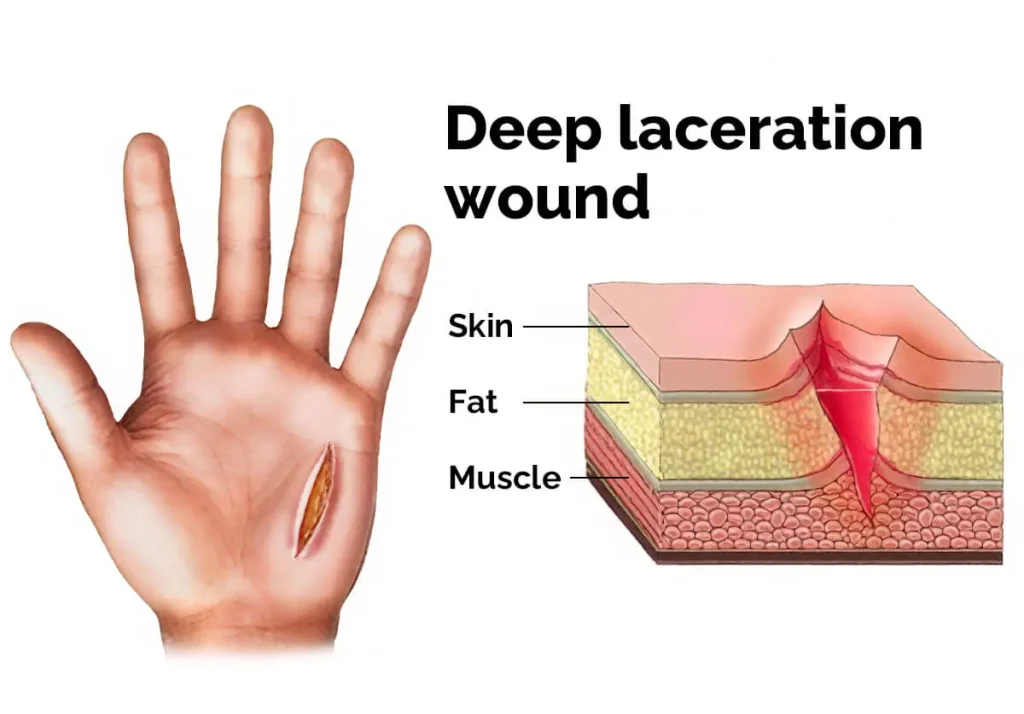
A laceration is a type of wound that appears as a cut on the skin. It can be straight or jagged, depending on how the injury happened. Some lacerations are shallow, while others can be deep and reach the layers beneath the skin. They often bleed a lot, especially if a blood vessel is affected. The edges of the wound may be uneven or torn, and in more severe cases, tissue underneath the skin may be visible. Medical dressings are important in managing lacerations by helping stop bleeding, protecting the area from infection, and supporting proper healing.
Depth
In wound care, the depth of a laceration is an important factor because it shows how serious the injury is. A laceration can go through more than one layer of skin and, in deeper cases, may reach the fat, muscle, or even bone underneath. Deeper lacerations take longer to heal and have a higher risk of infection or complications. Medical dressings are used to protect these wounds, keep them clean, and support healing by creating a safe and moist environment that helps repair the damaged tissue layer by layer.
Common Causes
Lacerations are wounds caused by cuts or tears in the skin, often due to sharp objects. Common causes include contact with knives, broken glass, sharp metal edges, or accidents involving forceful impacts that tear the skin. These injuries often require proper cleaning and the use of medical dressings to prevent infection and support healing.
Healing Process
The healing process of a laceration depends on how deep and large the wound is. Some may heal quickly with basic care, while others may need stitches and take longer to recover. Deep lacerations are more likely to leave noticeable scars. Using the right medical dressing helps protect the wound, keeps it moist, and supports faster and cleaner healing, reducing the chance of complications.
Specific Care for Lacerations
Immediate Medical Attention
Many lacerations, especially if they are deep, long, or have jagged edges, need to be checked by a medical professional. These types of wounds may require stitches or other methods to close the skin properly. Early treatment helps prevent infection and supports faster healing.
Controlling Bleeding
Stopping the bleeding is very important before medical help is available. Applying gentle pressure with a clean cloth or sterile dressing can help slow or stop the bleeding, which protects the wound and reduces the risk of further damage.
Cleaning
It is important to clean around the wound to remove dirt and bacteria. However, if the laceration might need stitches, deep scrubbing should be avoided as it may cause more damage. Using clean water or a wound-cleaning solution can help keep the area clean until a doctor examines it.
Proper Closure
Once a medical professional has assessed the wound, it may be closed using stitches, staples, or medical glue. This helps the edges of the wound stay together, lowers the chance of infection, and improves the final appearance of the scar. Medical dressings are then used to protect the area during healing.
Dressing
Lacerations should be kept covered with an appropriate medical dressing. Covering the wound protects it from dirt, bacteria, and further injury. A suitable dressing also helps keep the area moist, which supports faster healing and reduces the risk of scarring.
Monitor Closely for Infection
Lacerations can be deep, which increases the risk of infection. It is important to check the wound often for signs like redness, swelling, pus, or increased pain. Using medical dressings that protect against bacteria can help reduce this risk and support safe healing.
Abrasion vs. Laceration

Cause
An abrasion is caused by scraping or rubbing the skin against a rough surface, such as falling on pavement. It results from friction.
A laceration, on the other hand, is caused by a sharp object or strong tearing force, like a cut from glass or a deep tear from an accident. Understanding the cause helps in choosing the right medical dressing for proper healing.
Depth and Severity
Abrasions are usually shallow wounds that only affect the top layer of the skin. They often heal quickly and cause mild to moderate pain.
Lacerations are deeper and cut through the skin into the tissues below. Because they may damage nerves and blood vessels, lacerations are more painful and require more care. Medical dressings for lacerations often need to control bleeding and protect deeper tissues.
Appearance & Symptoms
Abrasions typically look like red, rough patches on the skin with little bleeding. The skin may feel sore but is usually not swollen.
Lacerations look like deep, open cuts with uneven or jagged edges and more noticeable bleeding. Swelling, bruising, and pain are also more common with lacerations. Using the right medical dressing helps control symptoms and supports proper healing based on the type of wound.
Bleeding
Abrasions usually result in light bleeding that slowly oozes from the skin because only the surface layer is damaged. This makes them easier to manage with basic dressings.
Lacerations, however, may involve deeper tissues and blood vessels, which can lead to heavy bleeding. In these cases, dressings must be able to absorb more blood and protect the wound while medical attention is provided.
Wound Edges
The borders of an abrasion are rough and spread out, caused by scraping against a surface. This type of damage does not break the skin deeply.
In contrast, lacerations cause the skin to split open. The edges of a laceration may be straight and clean (as from a knife) or jagged and torn (as from an accident). These differences in edges affect how the wound is treated and whether it needs to be closed with stitches..
Clinical Significance
Correctly identifying the wound type is important in choosing the right treatment. Abrasions are usually less serious and can be treated at home with cleaning, ointment, and proper dressing. They rarely need a doctor unless they become infected.
Lacerations, especially those that are deep or long, often require urgent medical care. They may need to be stitched, stapled, or glued to help the skin heal properly and avoid complications like infection or scarring.
Risk of Infection
All open wounds carry a risk of infection, but deeper wounds like lacerations have a higher chance of getting infected. This is because bacteria can enter further into the tissue, especially if the wound is not cleaned or closed correctly. Medical dressings play a key role here by keeping the area sterile, absorbing fluid, and protecting the wound from bacteria and dirt.
Treatment Approaches
For abrasions, the first step is to gently wash the area to remove any dirt or particles. Leaving debris in the skin can cause long-term marks or infections. After cleaning, a moist wound dressing is used to protect the area and support healing.
For lacerations, the first goal is to stop any bleeding by applying pressure. If the cut is deep or won’t close on its own, it must be treated by a medical professional. Afterward, special wound dressings are used to cover the area, reduce infection risk, and support healing.
Need for Stitches
Abrasions heal on their own and do not require stitches. Lacerations, however, often need medical closure, especially if the skin is pulled apart, the wound is deep, or the bleeding won’t stop. Stitches, staples, or skin glue help hold the wound together and prevent infection or scarring.
Healing Times
Abrasions heal quickly, often in 3–7 days, depending on the size and depth. They mostly need moisture-retaining dressings and regular cleaning. Lacerations take longer to heal—sometimes several weeks—because the skin and tissues underneath need more time to close and rebuild. Proper dressing care during this period helps speed up recovery.
Scarring
Abrasions affect only the outer skin layer therefore, they usually heal without leaving a scar—especially if kept clean and moist.
Lacerations, due to their depth and tissue damage, are more likely to leave a scar. Most likely if the wound is under dry healing environment. Scarring can be reduced with good wound care, including infection control and scar-minimizing dressings or ointments.
Tailored Wound Care Solutions for Your Business

Our medical dressing manufacturing services offer advanced solutions that are specially designed to support healing for both abrasions and lacerations. Our medical dressing sourced from Ganoderma is a versatile product line that includes gels, sprays, and sheet masks, making it suitable for different wound types and healing stages.
For Abrasions, which are shallow scrapes on the skin, our gel and spray dressings provide a moist environment that prevents scabbing and encourages smooth skin recovery. They contain antibacterial agents that protect against germs, reduce pain and inflammation, and help the skin heal with less risk of scarring.
For Lacerations, which are deeper cuts, our dressings are used after the wound has been cleaned and possibly stitched. The patch and gel medical dressings form a protective barrier over the wound, reduce the chance of infection, and support new tissue growth. This helps speed up healing and reduces visible scarring during the skin’s remodeling phase.
