

Understanding the Basics
Dry Wound Healing
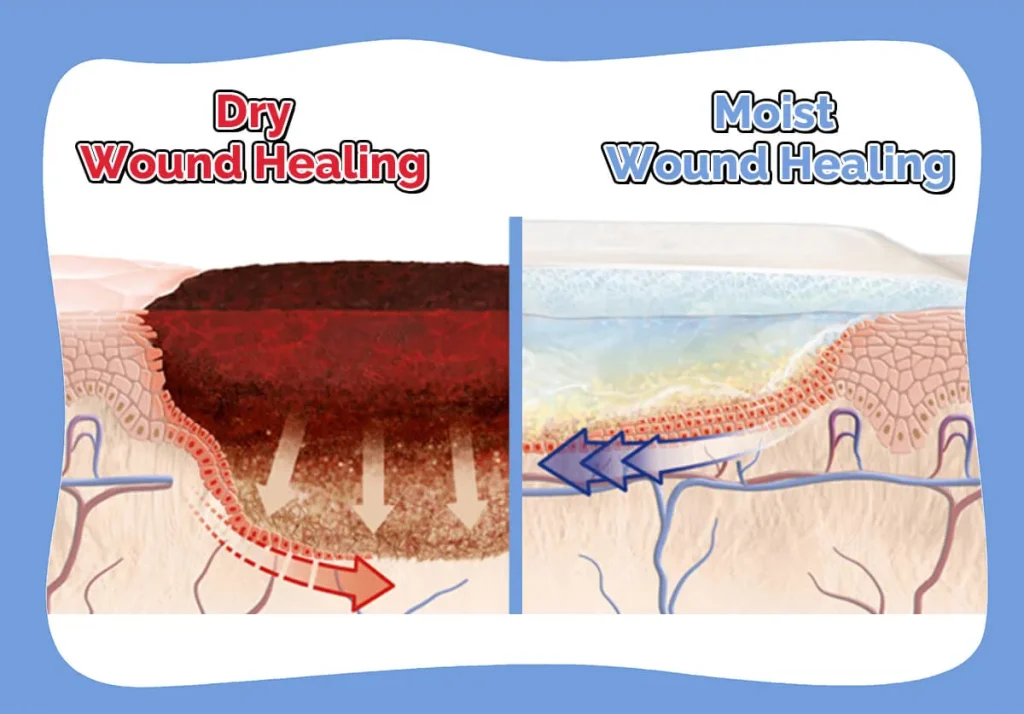
Dry wound healing is a traditional method used to treat skin injuries. In this approach, the wound is left exposed to air so it can dry out and form a hard protective layer called a scab. The scab acts as a natural barrier that helps protect the wound from dirt, bacteria, and further injury while the skin underneath begins to repair itself.
This method was widely used in the past and is still recognized in some basic skincare routines. However, while it can protect the wound on the surface, dry wound healing may slow down the overall healing process and increase the risk of scarring. Many modern skincare experts now recommend moist wound healing techniques for faster recovery and better cosmetic results.
Moist Wound Healing
Moist wound healing is a modern skincare and medical approach that supports faster and more effective skin repair. This method is based on the idea that keeping a wound slightly damp that neither too wet nor too dry, creates the ideal environment for the skin to heal naturally.
When the skin stays moist, new cells can grow and move across the wound more easily. This helps to close the wound faster and reduce the chance of scarring. Moist conditions also support the activity of growth factors and reduce the risk of infection, which is important in skincare treatments like microneedling, acne care, or post-surgical recovery.
In the skincare industry, moist wound healing principles are now used in many advanced treatments and products, including healing creams, hydrogels, and sheet masks. These products help maintain the right level of hydration on the skin to support its natural repair process. This concept has changed how the skincare world looks at recovery and has improved results in both clinical and everyday beauty routines.

Moist vs Dry Wound Healing
In the skincare industry, understanding how wounds heal is important, especially when developing products that support skin repair. One key concept is Moist vs Dry Wound Healing.
Dry wound healing happens when a wound is left exposed to the air. This causes the surface to dry out and form a scab. While scabs are part of the natural healing process, they can lead to cell death, create a barrier that slows down healing, and often result in more noticeable scarring.
On the other hand, moist wound healing creates a protected environment that keeps the wound hydrated. This method helps prevent dehydration of skin cells, allows new skin to grow more easily, and speeds up recovery. Moisture also reduces the chance of scarring by supporting healthy tissue regeneration.
Today, many advanced skincare treatments and wound care products are designed with Moist vs Dry Wound Healing in mind, choosing the moist method for better results and healthier skin recovery.
Comparison of Moist vs Dry Wound Healing
| Feature | Dry Wound Healing | Moist Wound Healing |
|---|---|---|
| Healing Speed | Slower | Up to two times faster |
| Scab Formation | Prominent scab formation is typical | Scab formation is often prevented or minimized |
| Cell Movement | Hindered by the dry, hard scab | Facilitated by the moist environment |
| Scarring Risk | Higher chance of visible scar formation | Lower risk of significant scarring |
| Pain & Discomfort | Can be more painful, especially during movement | Often less painful and more comfortable |
| Infection Risk | Scab can sometimes trap bacteria | Protective dressings in moist healing help prevent infection |
| Hydration | Skin becomes dry and dehydrated | Keeps the wound area hydrated |
| Nutrient Delivery | Can be less efficient to underlying tissue | Enhanced delivery of essential nutrients to healing cells |
| Modern Skincare Usage | Less commonly used in skincare | Common in skincare products and treatments |
