

Understanding of Wound Care
Wound Care
In the past, traditional wound care mainly relied on dry dressings like gauze to cover and protect wounds. However, modern understanding of wound healing has changed, leading to more advanced and effective methods.
Today, trends in wound management focus on keeping the wound moist, preventing infection, and supporting faster tissue repair. There is a clear shift towards evidence-based practices that use scientific research to guide treatment choices. In addition, trends in wound management now emphasize patient-centric care, where the treatment is tailored to each individual’s needs for better healing results and overall comfort.
Wound Care Market
The global wound care market is changing rapidly, driven by rising demand for advanced healing solutions and a growing focus on non-surgical and biologically based treatments. Recent years have seen an increase in clinical research supporting innovative wound dressing technologies, especially those that enhance healing for chronic wounds such as venous leg ulcers.
Market Size & Forecast
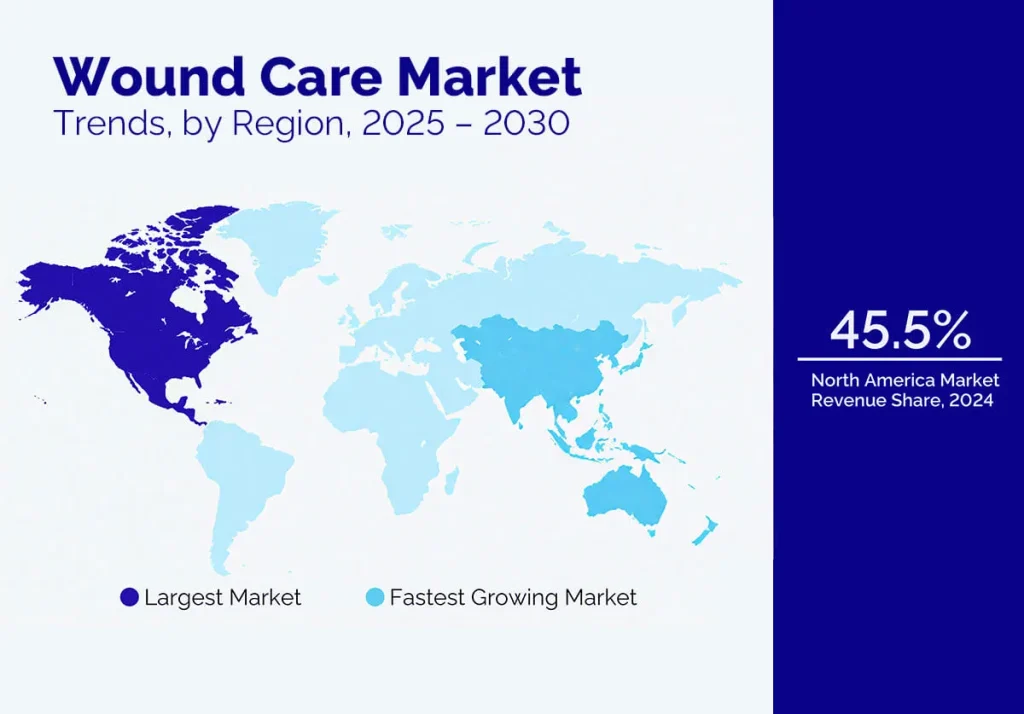
The global wound care market is undergoing steady growth, driven by rising chronic disease cases, an aging population, increased trauma injuries, and the demand for advanced, patient-centric healing solutions.
The global wound care market is valued at USD 23.1 billion in 2024 and is expected to reach over USD 30 billion by 2030, growing at a CAGR of 4.2%.
Chronic wounds—such as diabetic ulcers, pressure sores, and post-surgical wounds—continue to dominate, accounting for over 60% of the total market share.
Growth drivers:
- Rising prevalence of chronic conditions: Diabetes-related foot ulcers affect up to one-third of patients, impacting an estimated 18.6 million people worldwide
- Increased burn and traumatic injuries: Annual global burn incidents at 180,000 and over 1.19 million traffic-accident fatalities contribute significantly to demand
Product Segment Insights
- Advanced dressings (hydrocolloid, antimicrobial, bioactive) hold a leading market share (≈ 35%) and are anticipated to grow fastest.
- Surgical wound care is also witnessing significant growth, driven by rising surgery volumes and surgical site infections
| Category | Key Data/Trend |
| Market Size | USD 23.1 b in 2024 → projected USD 30 b+ by 2030 (4.2 % CAGR) |
| Chronic Wounds | 60 % market share; driven by diabetes, ulcers, aging |
| Acute Wounds | 4.3 % CAGR; fueled by burns, trauma |
| Advanced Dressings | 35 % share; fastest-growing segment |
| Innovation | Growth in smart dressings, telehealth, biodegradable products |
| Systemic Challenges | 42 % note waiting times & staffing shortages (global survey) |
Trends in wound management
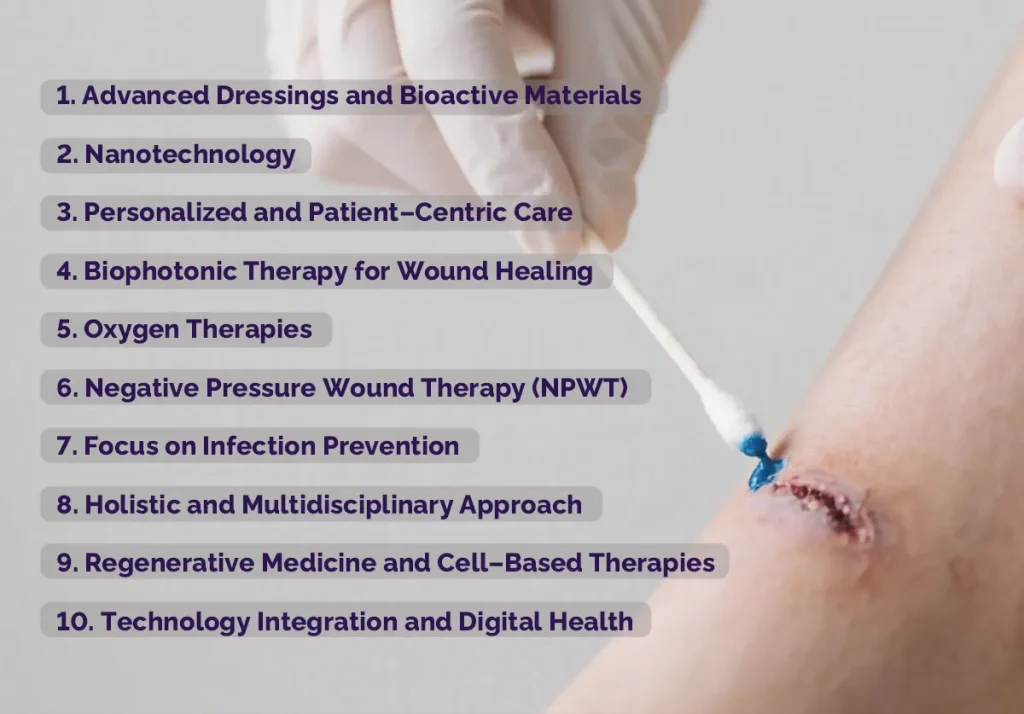
1. Advanced Dressings and Bioactive Materials
Moist Wound Healing
One of the key trends in wound management is the use of advanced dressings and bioactive materials that support moist wound healing. This method is now considered the gold standard in treating wounds because it helps create the best environment for skin cells to grow and move, which speeds up the healing process. Advanced medical dressings are designed to keep the wound moist, not too wet or too dry, which is important for healthy tissue repair. As part of modern trends in wound management, these dressings also help reduce pain, protect against infection, and improve overall recovery outcomes.
Smart Dressings
Smart dressings are designed to do more than just cover a wound; they can monitor the wound’s condition by checking important signs like pH levels, temperature changes, and infection markers. This helps detect early signs of wound infection or poor healing. Some smart dressings can also release medicine directly onto the wound when needed, making treatment more effective and reducing the need for frequent dressing changes. As trends in wound management continue to grow, smart dressings are becoming a promising solution for faster, safer, and more personalized healing.
Bioactive Materials
Bioactive materials help it heal faster and better. Materials like chitosan, alginates, collagens, and hyaluronic acid are now commonly used in advanced medical dressings because they support the natural healing process. These bioactive materials can promote cell growth, reduce inflammation, and fight bacteria, which helps lower the risk of infection. As trends in wound management continue to improve, the focus is on dressings that not only protect the wound but also actively help the skin recover.
2. Nanotechnology
Nanotechnology involves adding nanofibers and nanoparticles into the dressing materials to improve how wounds are treated and healed. These tiny particles help create an antibacterial surface that can stop harmful bacteria from growing, which is important for preventing infections. Nanotechnology also strengthens the dressing, making it more durable and effective. In addition, it helps keep the right level of moisture in the wound and allows air (oxygen) to pass through, both of which are important for faster and healthier healing. As part of modern trends in wound management, nanotechnology offers advanced support for safer and quicker recovery.
3. Personalized and Patient-Centric Care
Personalized and patient-centric care focuses on creating treatment plans that match each patient’s unique needs, including their medical conditions, daily lifestyle, and the specific type of wound they have. It also involves the patient in decision-making, which helps them better understand the treatment process and follow it more closely. As a result, this trend in wound management not only improves healing outcomes but also builds trust between healthcare providers and patients, leading to more effective and long-term care.
4. Biophotonic Therapy
Biophotonic therapy uses low-level lasers, such as red, green, and blue light, around wound areas. This therapy helps kill bacteria, viruses, molds, and fungi, reducing the risk of wound infection. It also supports the body’s natural healing process by increasing ATP production, which provides energy to cells. Biophotonic therapy improves oxygen flow to the wound, enhances the flexibility of skin cells, and activates telomerase, an enzyme linked to cell repair and renewal. As part of current trends in wound management, this non-invasive method is gaining attention for its ability to speed up healing in a safe and effective way.
5. Oxygen Therapies
One of the growing trends in wound management is the use of oxygen therapies to improve healing. These therapies involve applying high levels of oxygen directly to the wound area using special equipment. The goal is to increase oxygen in the tissues, which helps boost cell activity and supports the growth of new, healthy tissue. A well-known method is Hyperbaric Oxygen Treatment (HBOT), where the patient breathes 100% pure oxygen in a pressurized chamber. This process allows more oxygen to reach the wound site through the bloodstream, helping to reduce infection and speed up recovery. As part of modern trends in wound management, oxygen therapies are becoming more popular for treating slow-healing or complicated wounds.
6. Negative Pressure Wound Therapy (NPWT)
Negative Pressure Wound Therapy (NPWT) is one of the important trends in wound management. It involves using a vacuum pump to apply gentle, controlled suction to the wound area. This method helps remove extra fluid, reduces swelling (edema), and improves blood flow to the wound, all of which support faster healing and help lower the risk of infection. As trends in wound management continue to evolve, the focus is now shifting toward more advanced, portable and wearable NPWT devices, making treatment easier and more convenient for patients outside of hospital settings.
7. Focus on Infection Prevention
The key trends in wound management today are a strong focus on infection prevention. Instead of relying only on antibiotics, there is a growing use of advanced medical dressings that have built-in antimicrobial properties. These dressings help prevent the growth of harmful bacteria, thereby reducing the risk of wound infection while minimising the contribution to antibiotic resistance. Another important trend in wound management is taking proactive steps to identify and control the bioburden, which means reducing the number of microorganisms in a wound before they cause serious infection. These approaches reflect a modern shift in wound care toward safer, more effective methods that protect the wound while supporting wounds heal faster.
8. Holistic and Multidisciplinary Approach
This method looks at the whole person, not just the wound itself. Systemic factors like proper nutrition, stable blood sugar levels, and healthy blood circulation are now understood to play a major role in how well a wound heals. Because of this, trends in wound management focus on teamwork among different healthcare professionals. Doctors, nurses, dietitians, and podiatrists often work together to create a full care plan that supports both the wound and the patient’s overall health. This collaborative care helps reduce complications and supports better healing outcomes.
9. Regenerative Medicine and Cell-Based Therapies
Regenerative Medicine and Cell-Based Therapies focuses on helping the body heal itself by using advanced materials like scaffolds that are filled with special cells and growth factors. These scaffolds act as a support structure at the wound site, encouraging new cells to grow and repair damaged tissue. Other treatments include biomembranes, skin replacements, and the direct application of growth factors to wounds that are slow to heal. These modern solutions are especially helpful for chronic wounds and are becoming a key part of current trends in wound management, aiming to improve healing speed and outcomes in a more natural and effective way.
10. Technology Integration and Digital Health
Telemedicine/Telehealth
One of the major trends in wound management is the growing use of telemedicine or telehealth. This allows healthcare professionals to assess and monitor wounds remotely through video calls, photos, or online consultations. It is especially useful for patients with chronic wounds or those living in remote areas who cannot visit clinics often. By using telehealth, the condition of the wound can be regularly checked, and medical dressing changes or treatments can be guided without delays.
Digital Wound Measurement
Digital wound measurement is also becoming a popular trend in wound management. Using mobile apps or smart devices, healthcare providers can measure the size and depth of wounds accurately and consistently. This helps in tracking healing progress over time. When combined with medical dressings, digital measurements make it easier to know if a wound is improving or if new care steps are needed.
Artificial Intelligence (AI)
Another key trend in wound management is the use of artificial intelligence (AI). AI tools help analyze wounds, predict how quickly they may heal, and suggest the best treatment plans. This technology supports doctors in making faster and more accurate decisions. It also helps track how well a medical dressing is working and alerts professionals if changes are needed to avoid infection or delays in healing.
Our Advanced Medical Dressings
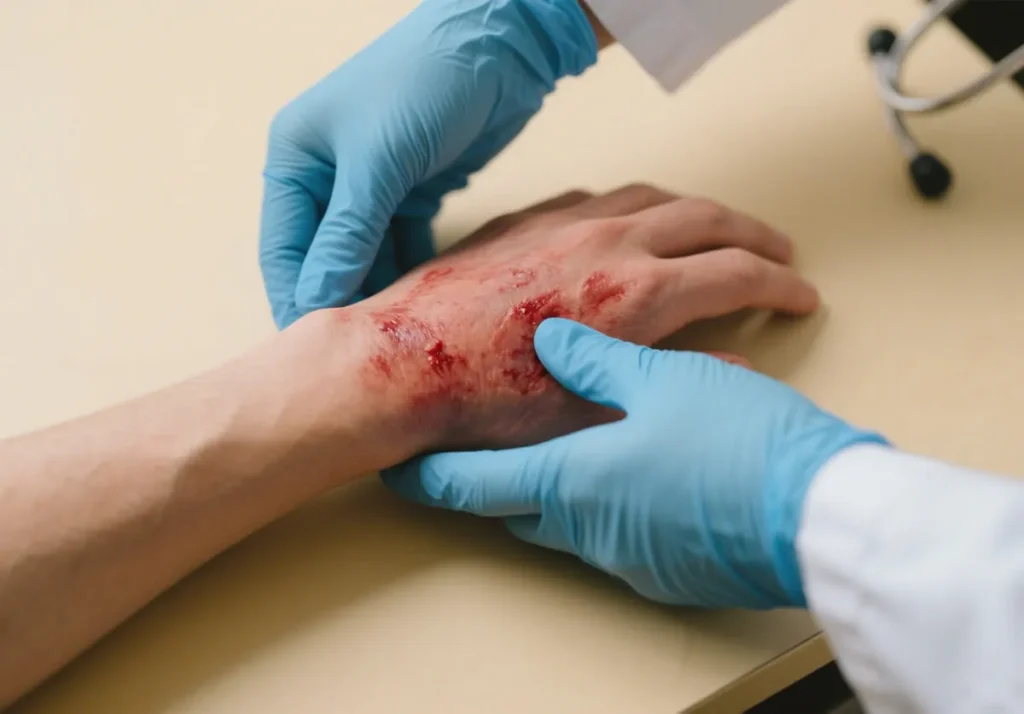
Trends in wound management are focusing on safer, more natural, and effective healing solutions. Our private-label medical dressings follow these trends by using advanced ingredients like Ganoderma Lucidum chitosan. The Rapid Skin Injury Healing Solution Sourced from Ganoderma is a great example. It helps protect wounds from infection, keeps the wound moist for faster healing, and reduces swelling. It is made from plant-based ingredients, so it is gentle on the skin and free from allergens or heavy metals. These features make our dressings a smart choice that fits well with today’s wound management trends.
- Faster Healing: Maintains optimal moisture, reduces swelling, and speeds up tissue repair.
- Infection Prevention: Naturally inhibits bacteria and fungi, supporting antibiotic-free wound care.
- Safe & Biocompatible: Hypoallergenic and free from heavy metals, that are gentle on all skin types.
- Skin Regeneration: Encourages new cell growth for faster recovery and reduced scarring.
- Versatile Applications: Available in sheets, gels, and sprays for various wound types.
Offer next-generation healing with bioactive medical dressings backed by nature and science.
FAQ
Advanced dressings: Recent advances in wound management focus on making healing faster, safer, and more effective. One major improvement is the use of advanced dressings, such as those that keep the wound moist and include bioactive ingredients like chitosan, which help protect against infection and support tissue repair.
Growing use of technology: Including telemedicine for remote wound monitoring and AI tools that help doctors assess wounds more accurately.
More personalized: Wound care is becoming more personalized, meaning treatments are now tailored to each patient’s specific needs.
Regenerative therapies—which help the body grow new, healthy tissue—are also being developed.
Antimicrobial stewardship, Meaning use antibiotics carefully to avoid resistance, and taking a holistic approach that looks at the patient’s overall health, not just the wound itself.
Carefully wash the wound to remove dirt, bacteria, and other harmful substances. Cleaning helps prevent infection and prepares the wound for healing.
Use the right type of dressing to protect the wound from germs and outside contamination. Covering also keeps the wound moist, which helps the skin heal faster and better.
Provide ongoing attention by regularly changing the dressing, watching for any signs of problems like increased redness or swelling, and making sure the body gets good nutrition to support healing.
Seek advice from a healthcare professional if the wound is deep, shows signs of infection, or does not heal as expected. Early consultation helps prevent complications and ensures proper treatment.
