

What is Chitosan
Chitosan is a natural, safe, and biodegradable material made from chitin, which comes from the shells of crustaceans or from certain fungi. It is a type of carbohydrate polymer known for its healing, antibacterial, and moisture-retaining properties, making it widely used in medical dressings and wound care.
Understand Chitosan Market
Market Size
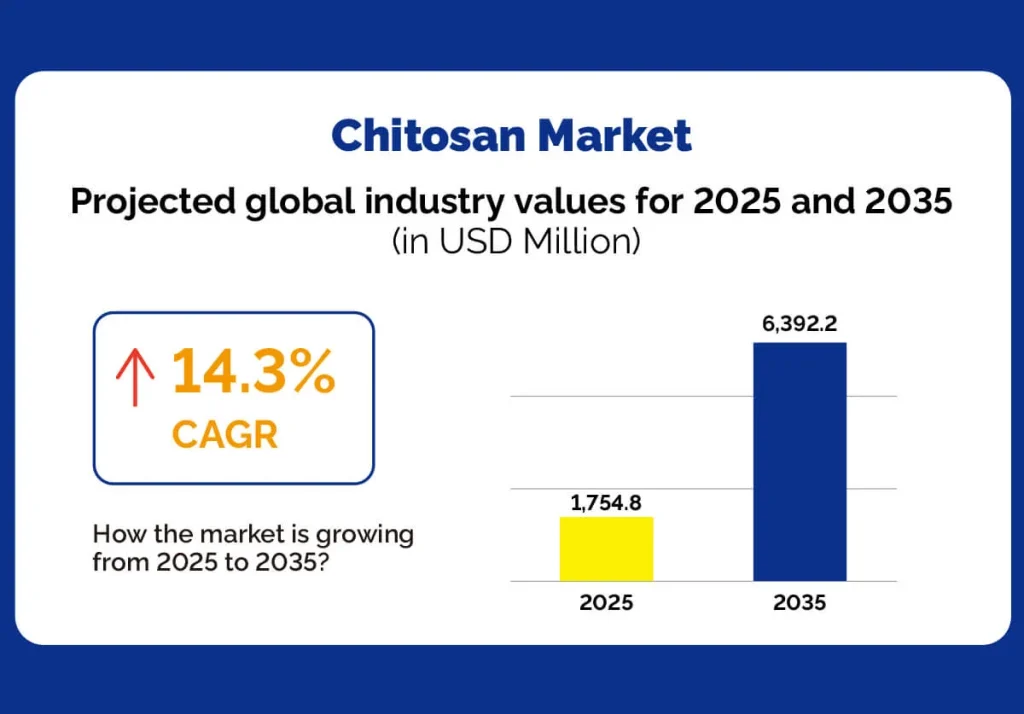
The global chitosan market is expected to be worth around USD 1,754.8 million in 2025. It is growing quickly at a rate of 14.3% each year and is predicted to reach USD 6,392.2 million by 2035. This growth is mainly due to the increasing demand for eco-friendly and natural materials, especially in industries like medicine, wound care, cosmetics, and water treatment.
Key Growth Drivers
Government Support & Regulations: Many countries now encourage the use of non-toxic, biodegradable materials. Chitosan fits this need well because it is safe for the body and breaks down naturally.
New Technologies: New methods for making chitosan from fungal sources (like mushrooms) are helping improve the quality and purity of chitosan. These methods also reduce the need for animal sources, making production more ethical and vegan-friendly.
Challenges
High Production Costs: Making chitosan is still expensive, especially when trying to keep it pure and safe for medical use.
Dependence on Raw Materials: A lot of chitosan comes from seafood waste like shrimp and crab shells. If there are changes in the seafood industry or shortages of shellfish, it can make raw material supply unstable and affect the cost and availability of chitosan.
Trends in Chitosan

Shift to Non-Crustacean Sources
There is a growing move toward making chitosan from non-animal sources such as fungi (like Ganoderma Lucidum), mushrooms, and even insects. This shift helps solve problems linked to traditional shellfish sources, like allergies, heavy metal contamination, and environmental concerns. Using plant-based chitosan also supports vegan and sustainable product development.
Biotechnological Production
New methods using microbial fermentation are being explored to produce chitosan. These techniques allow for more control, higher purity, and consistent quality. This approach can help lower costs in the long term and make chitosan suitable for medical and pharmaceutical use.
Sustainable Packaging & Cosmetics
Chitosan is now used in eco-friendly packaging and clean-label cosmetics. In skincare, it offers benefits such as anti-aging effects, moisture retention, and natural healing support. Because it is safe, biodegradable, and skin-friendly, it fits well with green beauty and sustainable product trends.
Tailored Properties
Researchers are working on modifying chitosan to improve or add specific properties. For example, making it more water-soluble, stronger, or better at holding and delivering medicine. These custom changes help create targeted wound care solutions, such as dressings that release healing ingredients over time.
Nanotechnology Integration
Chitosan is also being used to make nanoparticles and nanofibers, which are very tiny forms of the material. These can carry medicine more effectively, fight bacteria better, and form advanced wound care materials like healing scaffolds. This technology is helping make next-generation medical dressings smarter and more efficient.
Stimuli-Responsive Systems
New research is helping to create chitosan-based materials that can react to changes in the body — such as pH, temperature, or enzyme levels. These smart materials can be used for on-demand drug release or wound monitoring, which means medicine is released exactly when needed, improving healing and reducing waste.
Biosensors
Chitosan is now being used in biosensors — special tools that detect biomarkers (signals from the body) inside a wound or body fluids. These sensors help monitor infection, healing progress, or other conditions, offering more accurate and timely care.
Synergistic Effects
Chitosan is often combined with other helpful ingredients like antibiotics, silver, growth factors, or polymers to create stronger, smarter materials. These combinations improve healing, reduce infection, and support tissue regeneration, making the dressing more effective than using chitosan alone.
3D Bioprinting
Chitosan is now being used in bio-inks for 3D printing. This helps scientists print skin tissues, organs, or custom wound dressings that match the shape and structure of a patient’s wound. It supports better repair and regeneration of complex injuries.
Expanding Biomedical Applications
Studies continue to discover new ways to use chitosan in medicine and wound care. This includes using it in eye treatments, bone healing, surgical recovery, and even cancer drug delivery, showing that chitosan has a lot of potential in many areas of healthcare.
Water Treatment
One of the biggest uses of chitosan is in cleaning water. It acts as a natural flocculant, helping remove heavy metals and dirt from wastewater.
Why it’s better than synthetic options: Chitosan is non-toxic, biodegradable, and safe for the environment. It also follows strict environmental rules, making it a top choice for eco-friendly water purification.
Advanced Wound Care
Chitosan is becoming an important material in advanced wound care. It is now used in more than just basic wound dressings. Its natural healing and antibacterial properties make it useful in modern medical treatments that support faster and safer healing, especially for serious or complex wounds.
Beyond Traditional Wound Dressings
Chitosan is now being used in internal wound healing methods. This includes:
- Surgical adhesives that help close wounds inside the body.
- Internal hemostats that stop bleeding during surgery.
- Drug delivery systems that allow medicines to be slowly and safely released into the body.
These new uses show that chitosan is moving far beyond regular bandages and is playing a role in high-tech medical care.
Tissue engineering
In tissue engineering, chitosan is used to build special structures called scaffolds that help the body repair damaged tissues like bone, cartilage, skin, or nerves. These scaffolds are especially helpful in healing chronic wounds that do not close easily, such as diabetic ulcers or long-term bedsores.
Smart dressings
Smart dressings are the future of wound care, and chitosan is at the center of this innovation. These advanced dressings combine chitosan with technologies like:
- Hydrogels that keep the wound moist, reduce pain, and help with the faster regrowth of skin.
- Nanotechnology, which can detect changes in the wound (like signs of infection) and respond by releasing medicine or changing color to alert healthcare providers.
Smart dressings made with chitosan are designed to:
- Fight bacteria,
- Speed up healing,
- Reduce the need for frequent dressing changes, and
- Offer personalized wound treatment.
This makes them especially valuable for patients with burns, diabetic ulcers, surgical wounds, and other complex injuries.
Impact of Trends on Wound Management
Safer and Effective Dressings
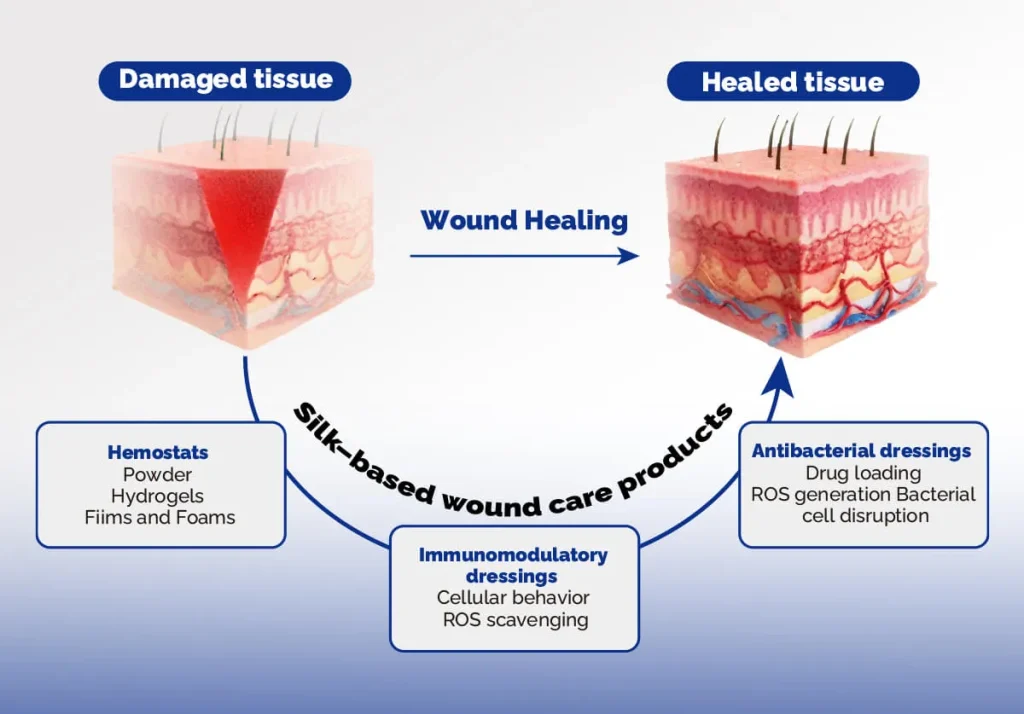
Recent developments in wound care focus on making dressings that are purer, safer, and more effective. Chitosan-based dressings are now made with hypoallergenic ingredients, meaning they are less likely to cause allergic reactions. These dressings are also highly active, supporting better healing by fighting infection and promoting new tissue growth.
Personalized Healing
Wound care is moving toward personalized solutions, where dressings are tailored to fit the specific type of wound and the health condition of the patient. For example, some wounds need more moisture, while others need stronger protection from infection. Chitosan dressings can be adjusted in strength, form, and ingredients to match different healing needs.
Reduced Complications
Advanced dressings made with chitosan help prevent infection, reduce inflammation, and speed up wound healing stages. This lowers the chance of a wound turning into a chronic problem or becoming worse over time. By promoting faster healing, these dressings also reduce pain, swelling, and the need for long-term treatment.
Innovation in Delivery
Modern wound care products are now available in various forms such as sprays, foams, gels, and even 3D bio-printed scaffolds. These new formats make it easier to treat different wound shapes and sizes, even in hard-to-reach areas. Chitosan’s flexible chemical structure makes it ideal for use in these innovative delivery methods, helping improve care in hospitals and at home.
Leading the Way in Chitosan Innovation with Our Medical Dressings
We focus on making medical dressings that reflect the newest trends in the industry. One of our flagship products, the ” Skin Healing Solution (Medical Dressing) Sourced from Ganoderma,” shows our strong commitment to high-quality, safe, and innovative wound care.
- Pioneering Plant-Derived Chitosan
Instead of using chitosan from seafood like shrimp or crab, we use Ganoderma Lucidum (Reishi mushroom). This plant-based chitosan is vegan, free from allergens, and contains no heavy metals, making it a safer and more ethical choice.
- Advanced Functional Properties
Our dressings use chitosan’s natural benefits to help wounds heal faster. They fight bacteria (antimicrobial), help stop bleeding (hemostatic), and support skin repair (regenerative). These advanced features reflect the growing demand for smart, functional materials in wound care.
- Optimal Healing Environment
We offer gels, sprays, and sheet masks that use chitosan’s ability to keep the wound moist, protect it like a film, and support smooth, fast healing. This matches today’s focus on personalized and effective wound care that puts the patient’s needs first.
Partner with us and create medical dressings that meet modern health and safety standards. Let’s work together to deliver the next generation of wound care solutions that are effective, ethical, and based on the latest in chitosan science.
